
Most people discover Western Massachusetts by accident. They take a wrong turn off I-90, catch a glimpse of the Holyoke Range, and suddenly a weekend errand becomes a two-night stay. That’s not a coincidence. This corner of the state packs in more outdoor variety per square mile than almost any comparable region in the Northeast, and the planning gap between a forgettable trip and a great one is smaller than you’d think. You just need a framework.
This guide gives you exactly that: a season-by-season breakdown of what to do, when to go, how to pick the right activities for your group, and what to watch out for. No filler, no vague suggestions.
Why Western Mass Is Worth the Drive
Outdoor recreation is having a genuine moment nationally. According to the U.S. Bureau of Economic Analysis, the outdoor recreation economy accounted for $696.7 billion, or 2.4 percent of current-dollar GDP, in 2024. That number reflects real demand from real people who are actively prioritizing time outside. Western Massachusetts is well-positioned to absorb a piece of that energy.
The region runs roughly from the Connecticut River Valley west through the Berkshires, giving you river flatlands, forested ridgelines, and mountain terrain all within about an hour’s drive. You can paddle a calm stretch of the Connecticut in the morning, hike to a summit view in the afternoon, and sit at a farmstand on the way home. That kind of itinerary density is rare.
The infrastructure is solid, too. A mix of state parks, private outfitters, and municipal trail systems means you’re rarely more than 20 minutes from a trailhead. And the region runs all four seasons, which matters a lot more than most travelers realize when booking.
The Four-Season Fit Test: Matching Your Group to the Right Window
Before you book anything, run your group through this quick decision framework. Call it the Four-Season Fit Test. Answer three questions: How active is your least adventurous person? What’s your tolerance for weather uncertainty? And do you care more about scenery or adrenaline?
Your answers drop you into one of four seasonal buckets.
| Season | Best For | Signature Activity | Watch Out For |
|---|---|---|---|
| Spring (Apr-May) | Paddlers, anglers, thrill-seekers | Whitewater rafting on the Deerfield River | Muddy trails, variable water levels |
| Summer (Jun-Aug) | Families, casual hikers, water lovers | Swimming holes, kayaking, mountain biking | Peak crowds on popular trails |
| Fall (Sep-Nov) | Scenic drivers, hikers, photographers | Foliage hikes along the Mohawk Trail | Weekend traffic spikes in October |
| Winter (Dec-Mar) | Skiers, snowshoers, backcountry explorers | Downhill and Nordic skiing in Charlemont | Ice on trails above 1,500 feet |
This framework isn’t perfect, and Western Mass genuinely blurs the lines between seasons. Late September can feel like summer at noon and autumn by 4 p.m. But having a primary season in mind keeps you from trying to do everything and ending up doing nothing well.
Fall: The Season That Earns Its Reputation
Fall in Western Massachusetts is not hype. The Berkshires and the Pioneer Valley run orange and red from mid-September through early November, and the progression moves west to east, which means a patient traveler can actually chase peak color for three or four weeks.
The National Park Service estimates that fall tourists spend over $8 billion in the New England region each year, and a big slice of that flows through towns like Shelburne Falls, Northampton, and Deerfield. Leaf-peeping is legitimately big business here, and the infrastructure around it, from trail parking to lodging, reflects that investment.
For hikers, the Pocumtuck Ridge Trail and the sections of the Metacomet-Monadnock Trail above the Connecticut Valley offer the best combination of color and views. Both are moderate enough for most fitness levels. If you’ve got a group with mixed abilities, stick to the lower Holyoke Range trails and skip the ridgeline scrambles until spring.
One honest warning: the second and third weekends of October are brutal for parking. If you’re set on going then, plan to arrive before 8 a.m. or aim for trails that don’t show up on the top ten lists. The lesser-known spots are usually just as beautiful.
Spring and the Whitewater Window
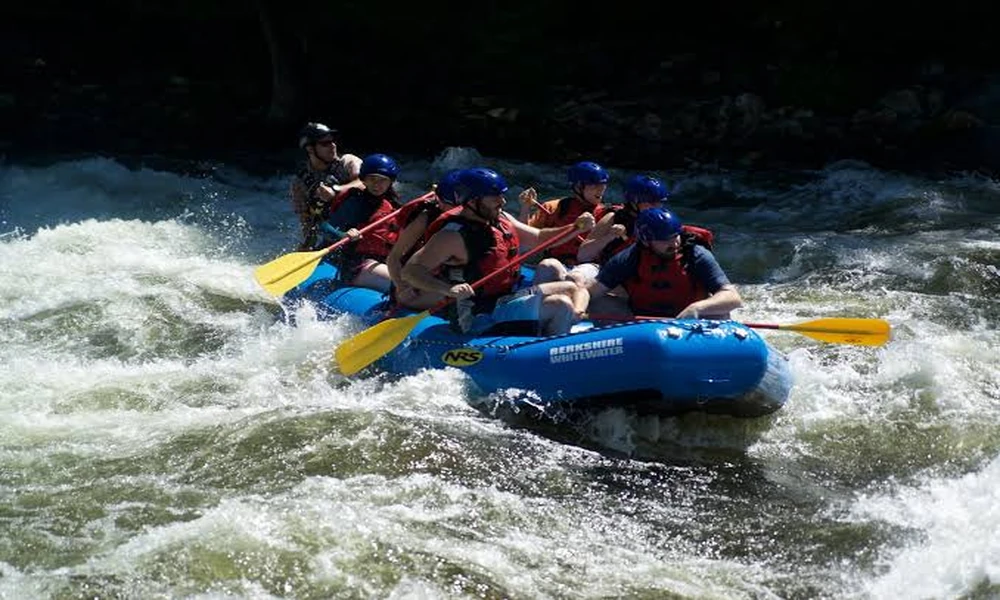
Spring is the season that most first-timers ignore and most regulars love. The Deerfield River runs through Charlemont in a long series of Class III and IV rapids that are almost perfectly calibrated for guided rafting. High snowmelt and spring rain fill the river from roughly late March through May, creating a short but excellent paddling window.
Here’s the scenario most people don’t think through: a group of four adults with zero whitewater experience shows up in late May expecting rapids and finds a mellow float instead. Timing is everything on the Deerfield. Check with local outfitters directly about current flow rates before you commit to a date. The difference between a thrilling run and a scenic float can be a single week.
Spring hiking, meanwhile, requires honest footwear. Trails above 2,000 feet stay muddy well into May, and some sections of the Appalachian Trail through the region see lingering snow patches. Microspikes are worth tossing in the car even in April.
Summer: Families, Water, and the Low-Key Magic of State Parks
Summer is when Western Massachusetts earns its family-trip credentials. State parks like Erving State Forest and Granville State Forest offer swimming, fishing, and low-key camping without the reservation lottery that plagues more famous parks farther north.
Hiking in summer is best done early. Most of the region’s summit trails are fully exposed by 10 a.m. and hot by noon. The D.A.R. State Forest in Goshen is a good exception: the forest cover keeps temperatures down, and the Metacomet trail through the area runs mostly in shade.
If your group has younger kids, the Connecticut River offers calm stretches that are perfectly suited to beginner kayaking. Rental options exist through several state recreation areas, so you don’t need to haul your own boats. This is also the right time of year to Explore Outdoor Activities in Western Mass as a launching point for building a custom itinerary across the region’s parks, trails, and water access points.
Winter: Skiing, Snowshoeing, and Why Cold Weather Travelers Win
The honest case for a winter trip to Western Massachusetts is this: everything is less crowded. The trails that clog in October are yours in January. The Berkshires in a fresh snowfall are genuinely beautiful, and anyone who hasn’t snowshoed through a hardwood forest after a nor’easter is missing something.
Berkshire East Mountain Resort in Charlemont runs a full ski operation alongside zip lines and the mountain coaster, which stays open in winter. Northfield Mountain Recreational Center offers groomed cross-country ski trails and snowshoeing on a trail network that sees almost no weekend crowds compared to Vermont alternatives.
One practical note: winter hiking requires microspikes or crampons on any trail above 1,200 feet. Ice conditions in the Pioneer Valley can be unpredictable, and a sunny afternoon can refreeze dangerously overnight. Tell someone your planned trail before you leave. That’s not excessive caution, that’s just basic practice.
Practical Planning Checklist Before You Go
About 63 million people went hiking in 2024, making it the most popular outdoor activity measured by the Outdoor Industry Association, a growth of about 5 million participants in four years, according to a report covered by Backpacker. That kind of growth shows up at trailheads. Use this checklist to stay ahead of it.
- Book lodging first. Weekends in October and holiday weeks in winter fill months out.
- Check trail conditions. Massachusetts DCR updates conditions for state forests on their site. Don’t assume.
- Pack for two seasons. Morning and afternoon temperatures in the Berkshires can swing 25 degrees. Layers are not optional.
- Confirm outfitter availability. Rafting, zip line, and guided tour slots go fast in peak season, especially for groups larger than four.
- Download offline maps. Cell coverage in the Charlemont and Goshen areas is unreliable on many trails.
Western Massachusetts does not reward passive visitors. The region has too much going on across too many seasons to work through a single, lazy weekend. But for anyone willing to pick a season, commit to a pace, and show up with the right gear, it consistently outperforms expectations. The question is which season matches your version of a good day outside. That answer is worth spending five minutes on before you ever start packing.
For authoritative national context on outdoor recreation trends, the U.S. Bureau of Economic Analysis outdoor recreation report (2024) provides state-level GDP data. For fall foliage ecology and timing, the National Park Service foliage guide explains the climate factors that drive peak color each year.